

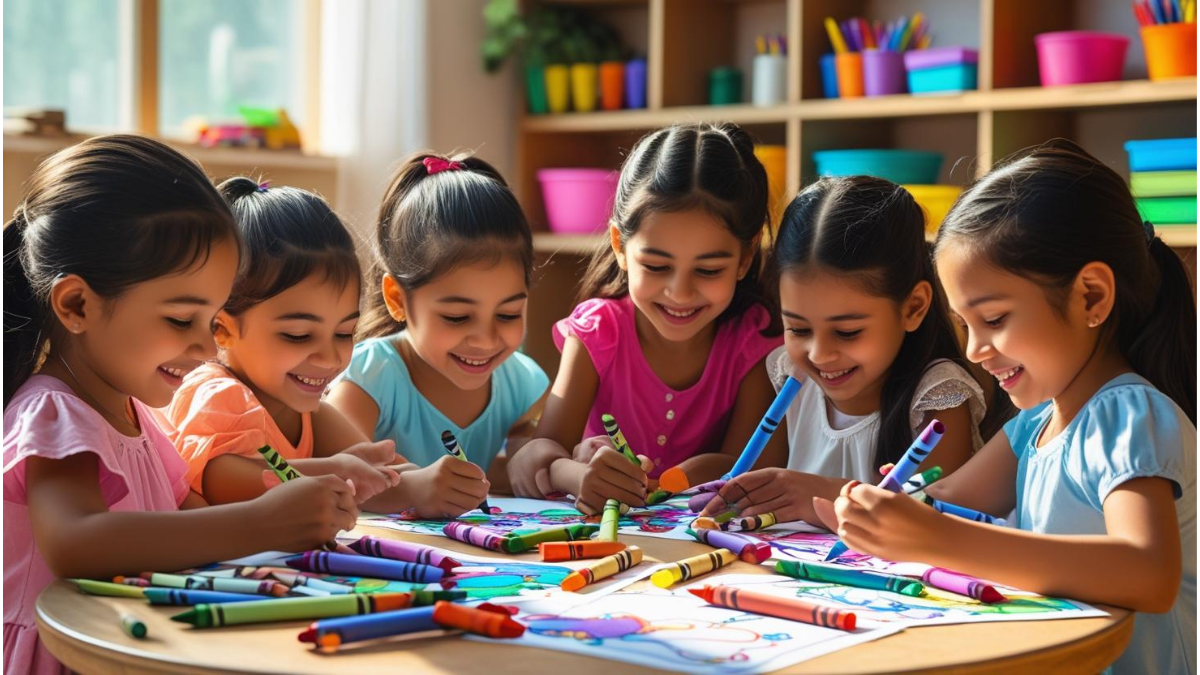
Discover how mindful colouring can lift your mood and steady mental health.
This guide walks you through ten clear reasons to add this calming habit to your day. You’ll learn how simple colouring moments can ease stress, steady focus, and create a sense of mental space. Perfect for anyone looking for gentle support for their mental health.
How Coloring Helps Young Learners: Educational and Mental Health Benefits
Color Therapy might seem like just a fun, quiet-time activity for kids, but it actually plays a huge role in early childhood development. Beyond giving little hands something to do, coloring helps kids grow in ways that set the stage for learning, emotional regulation, and creativity.
Here’s a closer look at why this simple activity deserves a regular spot in a child’s routine.
- Strengthening Fine Motor Skills
Every time a child picks up a crayon, they’re working on fine motor skills—those small but important hand and finger movements. These skills are crucial for everyday tasks like writing, buttoning a shirt, or tying shoelaces.
Coloring helps kids get better at controlling their hands, applying just the right amount of pressure, and staying within the lines. It’s all great practice for more complex skills down the road.
- Boosting Hand-Eye Coordination
Coloring involves more than just filling in a picture—it’s a hands-on lesson in coordination. Kids look at the image, choose colors, and try to stay within the lines. This kind of visual-motor work helps sharpen their hand-eye coordination.
That skill doesn’t just help in school (think writing neatly or cutting shapes); it’s useful in sports and everyday life, too.
- Learning Colors and Shapes
Coloring is one of the most natural ways for kids to learn about colors. They start to identify basic ones like red and blue, then move on to more complex shades like teal or peach. And when they mix colors? They’re learning about blending and visual impact without even realizing it.
Most coloring pages also feature different shapes, helping kids get familiar with circles, squares, triangles, and more—setting the stage for early geometry skills.
- Prepping for Writing
Before a child learns to write, they need to be able to control a pencil or crayon. Coloring gives them that chance. It builds hand strength and teaches them how to move their wrists, grip a tool, and make intentional marks on paper.
All of this pre-writing practice makes the jump to actual writing much smoother.
- Improving Focus and Patience
Sitting still and focusing can be tough for little kids—but coloring helps them practice. It’s a quiet, engaging task that gently teaches patience, attention to detail, and perseverance.
The more they color, the more they learn to stick with a task—and that focus carries over into reading, math, and other academic work.
- Encouraging Creativity
Coloring lets kids express themselves freely. Whether they stick with “realistic” colors or go wild with purple grass and pink elephants, they’re using their imagination.
That kind of creative thinking supports problem-solving, storytelling, and original ideas—skills that are valuable in every area of life.
- Supporting Emotional Growth
Sometimes, emotions are too big or complicated for young kids to explain with words. Coloring gives them another way to express what they’re feeling. It can also be calming, helping them feel more in control and centered.
That’s why therapists often include coloring in their work with children—it’s a gentle but effective tool for emotional expression and regulation.
- Teaching Structure and Boundaries
When kids try to stay inside the lines, they’re learning about structure. It’s not about perfection—it’s about understanding limits, developing self-discipline, and following through on a task.
Plus, finishing a page gives them a sense of accomplishment. They can see their progress, which builds pride and motivation.
- Building Language Skills
You might not think of coloring as a language-building activity, but it is—especially when it involves conversation. Kids often talk about what they’re coloring or ask questions while they work.
These chats build vocabulary and help develop storytelling and descriptive skills—all essential for reading and writing success.
- Boosting Confidence and Independence
There’s something powerful about finishing a picture and knowing, “I made that.” When kids complete a coloring page, especially if it’s displayed or praised, it builds their self-esteem.
They also get to make choices—what colors to use, how to fill the space—and that sense of control helps foster independence.
Making Coloring Therapy Even More Impactful
Want to get the most out of your child’s coloring time? Try this:
Mix up the tools: Crayons, markers, colored pencils, and even paint all help build different skills.
Pick the right designs: Younger kids do better with big, simple images. Older ones might enjoy more detailed patterns.
Encourage creativity: There’s no such thing as a “wrong” color. Let them experiment and explore.
Talk while they color: Ask open-ended questions like, “Tell me about your picture” or “Why did you choose that color?”
Use themed pages: Coloring sheets that feature letters, numbers, or holiday themes can tie into other learning topics.
Final Thought: Coloring Is Learning in Disguise
Coloring might look like simple play, but it’s doing a lot of heavy lifting behind the scenes. It helps children build skills they’ll use for life—motor control, emotional expression, creativity, and more.
So next time you see a child with a crayon, remember: they’re not just passing time—they’re learning in the best way possible: through play.



0 Comments